Classic
We live outside of town in a rural area. It is a 30-minute drive to the nearest city centre, regardless of direction. We own two vehicles: a car and a truck. The car is mine. The truck? My husband’s. The car is a sensible four-door sedan. The truck? The truck is what my husband calls a rare find, a collector, a classic.
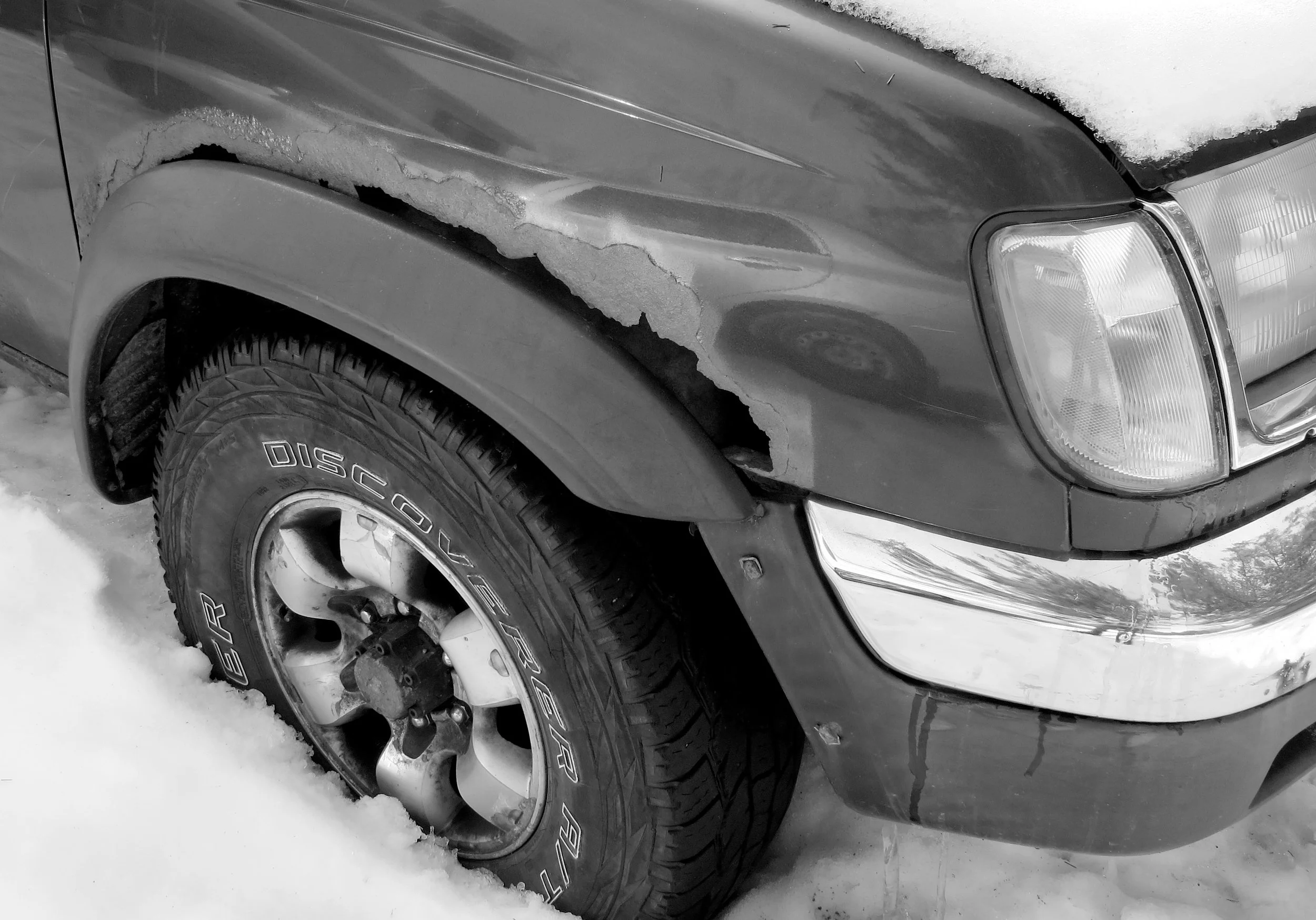
“Lots of people would love to have my truck,” he tells me. At this point, I wonder if there’s something wrong with my eyes. I look out the window to double-check. I see a nondescript 2000 green pickup that had its glory days more than 20 years ago. The cab extends just enough for two side-facing jump seats behind the driver and passenger, making the truck comfortable transport for two. (This is great if you’re single, but not if you’re married with children.) Like a balding man’s comb-over, a coat of green spray paint around the wheel wells draws attention to the patchy, ragged holes in this rusty leper I’d love to banish to the scrapyard. Are vehicles made after 1999 even considered vintage? Our opposing viewpoints are part of a frequent and much longer discussion. A discussion in which my husband’s concluding remarks are, “What? Sell the truck? You’ve got to be kidding! Lots of people would love to have my truck. It’s a classic.” I lift an eyebrow. Most days, my husband drives the car.
In addition to its collector appeal, the truck comes with various features which guarantee an adventure every time it is driven. The four-wheel drive doesn’t work. The horn doesn’t work. The tailgate is broken. The lights are dim. And, my favourite, the battery is dying. You never know if the truck is going to start or not. My husband refuses to replace the battery because he insists that’s not the problem. He once spent an hour wandering around Walmart because the truck wouldn’t start. I would have spent that time buying and installing a new battery. Walmart does sell vehicle batteries, don’t they?
As a side note, no one at home wondered why Dad was so late returning. My husband is always late getting home. If he was stranded on the side of the road in a blizzard or a meteor shower that was actually a covert alien invasion, it would be hours before anyone in our family would worry. Maybe by 11 p.m. someone might say, “Man! I could have had seconds at supper if I knew Dad wasn’t coming home to eat.” But, I don’t think we’d go looking for him until morning.
I’ve always told our boys, “If your father is late getting home, don’t worry. He always shows up eventually with an amazing excuse.”
“There were aliens! And, they were firing on me while I was driving! It looked like a meteor shower! I had to take another route home to avoid endangering other drivers and innocent bystanders. Of course, I stopped at the gas station to get some emergency supplies, and you wouldn’t believe who I ran into there. Haven’t seen him in years. He would have talked for hours, but I said I should get home.”
Until very recently, driving the truck came with the warning, “Don’t fall out.” As my husband nonchalantly explained to me last year, there was some “deterioration” in the floor on the driver’s side. This was code for, “The floor matt is covering a hole large enough to fall through.” So, unless I wanted to drive the truck Fred Flintstone style, my husband told me not to put weight on the floor while getting in or out of the truck. Clearly, my teenage mechanic son found this advice as ridiculous as I did, given that he obtained a piece of sheet metal from an old filing cabinet and repaired the truck floor.
During my years working at our local library, my job was closer to home than my husband’s. The shorter drive seemed in the truck’s best interests, and it soon became common knowledge at my workplace that, despite owning a car, I was most often stuck driving the truck. It also became common knowledge that I hated the truck.
Even on days when I drove my car to work, I was frequently tricked into driving the truck home. This was due to a sneaky switch my husband would make while I was working. Not expecting this sort of ploy, I would be oblivious of the swap until a friendly library patron greeted me with, “I see you got stuck with the truck today.”
“What?!” I would exclaim before rushing to the nearest window to glower at the parking lot.
On one memorable occasion, I drove the truck home during a rainstorm. The driver’s seat was soaked when I got in — a foreshadow of the misery to come. Once I was on the road, water dripped down my face from a leak in the truck roof. More water sprayed onto my legs from an unknown source in the floor, and the soggy seat cushion sloshed like a waterbed beneath me. The whole situation made the windshield wipers on the outside of the truck a little ironic.
A few years ago, we had trouble with the truck’s cooling system, and it began overheating — reliably. I would drive to work stealing nervous glances at the engine thermometer to make sure it wasn’t edging too close to H. One night after work, I headed home in the truck, only to realize, a few kilometres down the road, that the entire dash — gauges, radio, heating dials, A/C — was backlit in fiery red instead of its usual luminescent blue. I freaked. Obviously, the engine was on fire, and the dash was glowing red from the intense heat. The surprising part is, I kept driving. I regularly put a hand up on the dash to check how hot it was, but I kept driving. I had just finished an evening shift, and I was tired. I figured if the truck was going to burn up in a flaming finale, I wanted it to do so in our driveway while I was in the house eating a late supper. When I arrived home, exhausted, hungry, and happy to be alive, my husband explained that he and my mechanic son had been working on the truck the day before. They’d accidentally reset something which had changed the radio/dashboard lights from blue to red. Apparently, green is an option as well.
Some truck repairs have been made. The ceiling cloth no longer drapes onto my head while I drive. (My husband used a staple gun to reattach it to the truck roof.) And, the alternator has been replaced. Two summers ago, my youngest son and I decided to fix our upstairs toilet. We headed out in the truck (our only option) to the nearest hardware store to buy a toilet flapper. The truck stalled five times on the way there and back. We barely made it off the highway at one point, just glided onto the nearest concession, both of us rocking back and forth in hopes of keeping up momentum. When we were two houses away from our own, the truck stalled once more. My son hopped out of the cab, pounded on something under the hood, slammed the hood shut, and gave me the go sign to start the truck. The engine growled and barked. He jumped into the truck beside me, and I floored it. We swerved into our driveway without braking. My husband had told us that the truck sometimes stalled because of an issue with the gas tank and fuel line. Turned out, it was the alternator. How we made it to the hardware store and back again is far more difficult to explain.
These days, the classic vintage collector truck spends most of its time sitting in our driveway. Pondering the truck’s rusty green permanence, I remain un-wooed by its rare collector car mystique. I persist in trying to convince my husband that he should sell the truck for parts — and I really thought I was close. But then, this fall, a man came to our house to buy some used fishing gear from my husband. It was a mild evening and still light. Naturally, the two of them stood chatting for awhile about fishing before the man turned to leave. I was in the house, but I still managed to overhear the stranger say, “Wow! Nice truck. Hard to find classics like that these days.”